
The Short Answer: Yes, Colored Ink Can Be Removed
Colored tattoo ink is harder to remove than black because each pigment reflects certain wavelengths of laser light and only absorbs others. PicoWay’s multiple wavelengths let us match the right light to each color, so blues, greens, and reds can be broken down and cleared over a personalized plan.
South Florida Laser Studio is a laser tattoo removal studio serving Boca Raton and Miami, FL, led by specialist Erika, who uses PicoWay picosecond technology to fade and remove tattoos of every ink color and on every skin tone.
Why Colored Ink Is a Different Challenge Than Black
Black ink is the easiest pigment to remove because it absorbs virtually every wavelength of laser light. Colored inks are pickier. A laser only shatters a pigment it can be absorbed by, and each color absorbs a narrow band of the light spectrum while reflecting the rest. Point the wrong wavelength at a green tattoo and the light bounces off, leaving the pigment untouched.
That is why some studios struggle with color. A single-wavelength laser built for black ink can leave greens and blues barely faded after many visits. The solution is not more sessions with the wrong tool. It is the right wavelength for each color, which is exactly what a versatile picosecond platform delivers. At our Boca Raton and Miami studios, Erika starts every colored tattoo with a wavelength assessment so your plan is built around the pigments actually in your skin.
How PicoWay Wavelengths Target Each Color
PicoWay is a picosecond laser, meaning it fires in trillionths of a second. Those ultra-short pulses hit pigment with a photoacoustic shockwave that shatters ink into dust-fine particles your immune system can carry away. Just as important, PicoWay offers multiple wavelengths, so we can switch the light to match the target color.
| Ink Color | Removal Difficulty | Wavelength That Targets It |
|---|---|---|
| Black & dark brown | Easiest | 1064 nm (near-infrared) |
| Red, orange, pink | Responds well | 532 nm (green light) |
| Green & teal | More stubborn | Near-infrared range |
| Blue & sky blue | More stubborn | Near-infrared range |
| Yellow & light pastels | Variable | 532 nm, often needs more patience |
Reds, oranges, and pinks
Warm colors absorb the 532 nm green wavelength efficiently, so they usually fade at a steady pace. If you have a tattoo that mixes red with black outlining, we treat the two with different wavelengths in the same visit for even fading.
Greens and blues
Green and blue are the classic problem children. They reflect the red-light wavelengths that erase black ink, which is why they linger under older Q-switched lasers. PicoWay’s near-infrared options finally give these pigments light they will absorb, so the ink that used to sit there stubbornly starts to break apart.
Yellow and pastels
Light pastels and yellow carry less pigment density and can be less predictable. They often respond to the 532 nm wavelength but may need a more patient approach. Erika sets realistic expectations for these shades up front rather than overpromising.
Want the deeper technical picture? Our PicoWay laser tattoo removal page explains the technology, and our tattoo removal by type guide breaks down what to expect for different tattoo styles and ink combinations.
Why PicoWay Beats Older Q-Switched Lasers for Color
Traditional Q-switched lasers fire in nanoseconds, relying mostly on heat to fragment ink. PicoWay’s picosecond pulses are roughly a thousand times shorter and work by pressure rather than heat. The result is finer ink particles, faster clearance, and less risk to the surrounding skin. For colored ink specifically, the combination of picosecond speed and multiple wavelengths is the difference between a tattoo that fades and one that just sits there. For clients across Boca Raton and Miami, that means fewer wasted visits chasing colors that a black-ink laser was never going to move.
What Affects How Fast Your Colored Tattoo Fades
Color is only one piece of the puzzle. Several factors shape how a colored tattoo responds:
- Ink colors present — greens and blues typically take longer than blacks and reds.
- Ink density and layering — heavily saturated or stacked color needs more patience.
- Tattoo age — older ink has often already started to break down.
- Depth of the ink — professional tattoos placed deep behave differently than surface-level ink.
- Your skin tone and health — both influence which settings are safest and most effective.
- Aftercare — good tattoo removal aftercare helps your body clear shattered pigment faster.
Because every combination is different, we never quote a fixed number of visits online. Your plan is personalized at your free assessment, where Erika examines your specific colors and skin before mapping the path forward. Curious about spreading out the investment? Our payment plans make treatment manageable.
See What Color Removal Really Looks Like
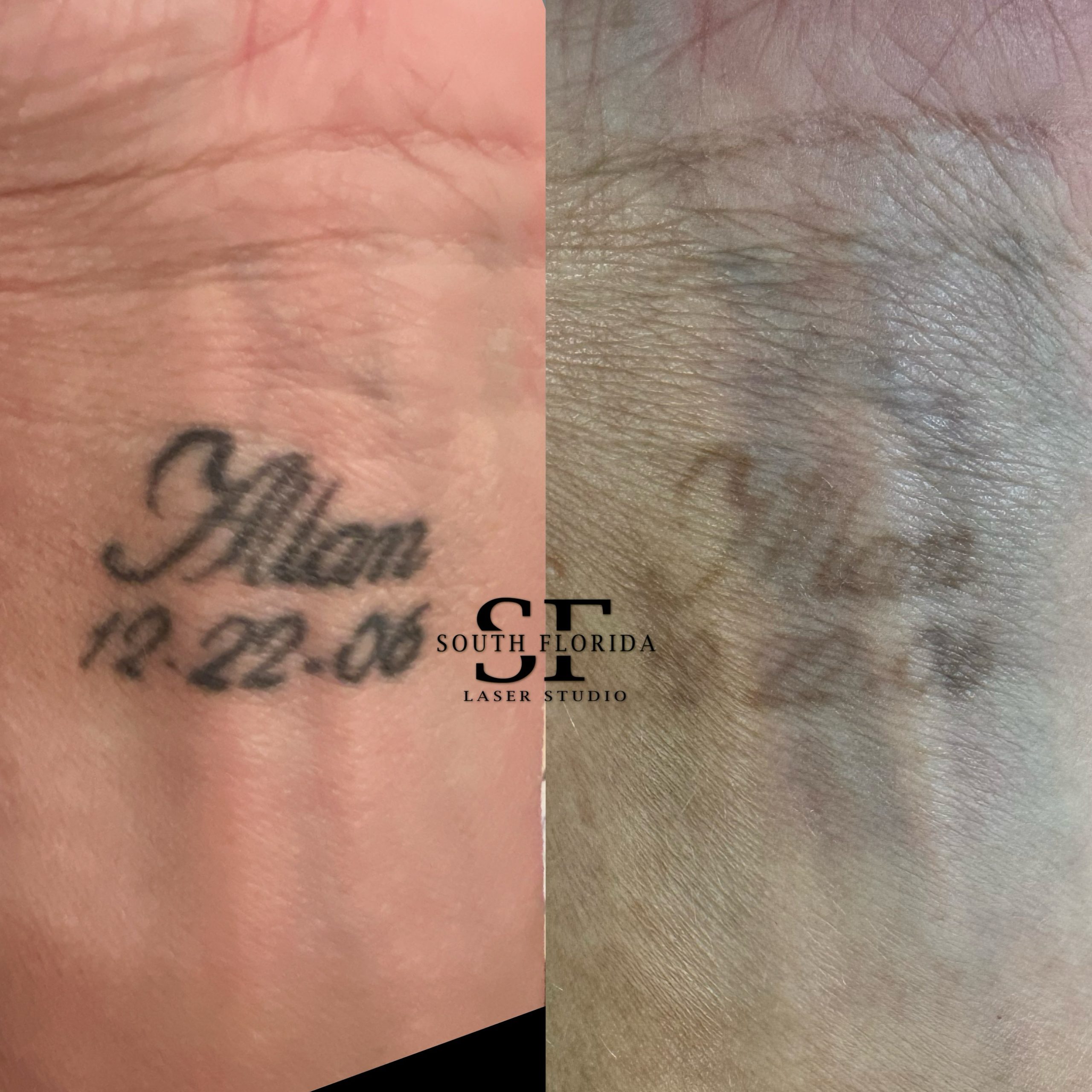
Photos tell the story better than any description. Our gallery shows real clients whose blues, greens, and reds have faded under PicoWay at our South Florida studios. See Before & After Results to set your expectations with real outcomes, not stock images.
Book Your Free Assessment in Boca Raton or Miami
If a colorful tattoo has you worried it can never come off, the honest answer is that the right laser makes a real difference. Meet Erika, get your pigments assessed, and leave with a plan built for your ink. Call 561-975-3807 to Book Your Free Assessment at our Boca Raton or Miami studio, and learn more about specialist Erika.
Frequently Asked Questions
Can any tattoo ink color be removed with a laser?
In most cases, yes. Modern picosecond lasers like PicoWay use multiple wavelengths to target black, blue, green, red, and other pigments. Stubborn shades such as bright green and sky blue simply need the right wavelength, which we identify at your free assessment in Boca Raton or Miami.
Why are green and blue tattoo inks so hard to remove?
Green and blue pigments reflect red light, so the red lasers used on black ink barely touch them. They absorb shorter, near-infrared wavelengths instead. PicoWay’s dedicated settings finally give these colors a laser they respond to.
Is red tattoo ink easy or hard to remove?
Red ink usually responds well because it absorbs the 532 nm green wavelength efficiently. Reds, oranges, and pinks often fade faster than greens and blues. Erika confirms the best wavelength for your specific red pigment during your assessment.
Does removing colored ink hurt more than black ink?
The sensation is similar regardless of color, often compared to a rubber band snap. PicoWay’s ultra-short pulses deliver energy quickly, which many clients find more tolerable. We use cooling and comfort measures at our Boca Raton and Miami studios.
Will colored ink leave a shadow or scar after removal?
PicoWay shatters pigment into tiny particles your body clears naturally, which lowers the risk of scarring compared with older lasers. Faint shadowing can occur with dense color but usually continues to fade. Erika reviews realistic expectations at your free assessment.
How soon can I start treating a colored tattoo?
We generally wait until a new tattoo is fully healed, about six to eight weeks. Treating too early risks skin damage. Book a free assessment and Erika will confirm your tattoo is ready for safe, effective color removal.